




The House That Remembers: Why Gothic Fiction Never Lets Go of Its Haunted Homes
Literary Analysis | October 4, 2026
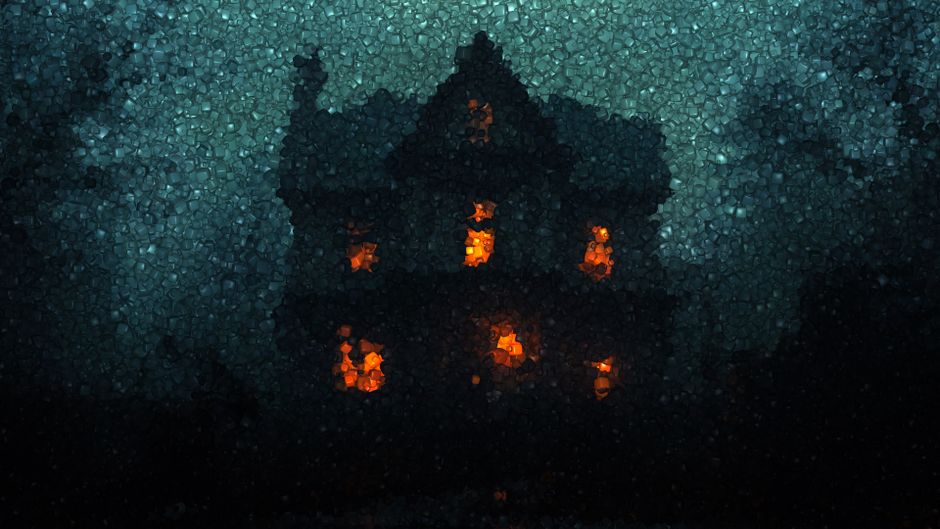
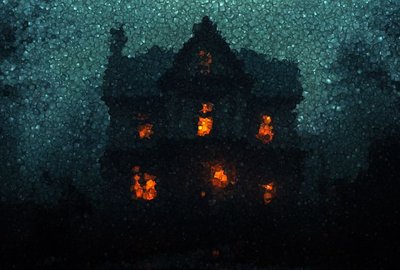
There is a moment in nearly every gothic novel when the house stops being a house. The doors seem to breathe. The corridors rearrange themselves in memory if not in fact. The protagonist, who arrived as a guest or a new bride or an heir, begins to suspect that the building has opinions about their presence. This is the oldest trick in the gothic playbook, and it has never stopped working, because it taps into something we all quietly believe: that places absorb what happens in them.
Horace Walpole's The Castle of Otranto, published in 1764 and often called the first gothic novel, set the template with a castle full of prophecy, secret passages, and a giant helmet falling from the sky. It is easy to laugh at the excess, but Walpole understood something essential. A castle is not just architecture. It is a family's claim to power, its guilt, its paranoia, all carved into stone. When the castle shakes apart at the end of the novel, it is not just a building collapsing. It is a bloodline collapsing.
The House as a Second Mind
By the time we reach the nineteenth century, the haunted house has become a psychological instrument. In Charlotte Brontë's Jane Eyre, Thornfield Hall hides a literal secret in the attic, but it also mirrors Rochester's carefully managed self-deception. The house is grand, dark, and full of locked rooms, which is a fair description of the man who owns it. Jane's task is not simply to survive the house. It is to see through it.
Shirley Jackson pushed this further in The Haunting of Hill House. Her narrator, Eleanor, arrives at Hill House already fragile, already hungry for belonging. The house does not so much attack her as absorb her. Jackson's genius is that we can never fully separate Eleanor's instability from the house's malevolence. They become the same thing. The house is not haunted by ghosts in the traditional sense. It is haunted by the people it has swallowed, and Eleanor is simply the latest in a long line.
This is why the gothic mansion refuses to die as a device. It externalizes interior states. Loneliness becomes a long hallway. Repressed memory becomes a boarded-up wing. Guilt becomes a stain that will not come out of the floorboards no matter how hard the housekeeper scrubs.
Why We Keep Coming Back to the Dark House
Contemporary writers understand this inheritance well. Sarah Waters, in The Little Stranger, uses a decaying country house to examine class, decline, and the quiet violence of nostalgia. The house is not haunted by a ghost but by a way of life that refuses to admit it is over. In many ways, that is more frightening than any specter.
What draws readers back, again and again, is not the jump scare. It is the recognition. We have all walked into rooms that felt wrong. We have all felt the atmosphere shift when a conversation turned. The gothic house takes that ordinary unease and builds it into something you can walk through. It gives shape to the shapeless dread that follows us out of childhood, out of old relationships, out of family histories we did not choose but cannot escape.
So the next time you open a gothic novel and the protagonist steps through a heavy front door, pay attention to the house itself. It is not scenery. It is a character with a memory, a grudge, and a plan. And it has been waiting for you.
-

-
Cold Cases, Old Ghosts: How Mystery and Gothic Fiction Borrow Each Other's Tools
Sep 19, 2026Craft & Technique

-


-

-
The House That Remembers: Why Gothic Fiction Never Lets Go of Its Haunted Homes
Aug 31, 2026Literary Analysis

-
The Quiet Horror of the Unreliable Narrator: Reading Between the Lines of Dark Fiction
Sep 6, 2026Craft & Technique

Raven Rock Read
When the voice telling the story cannot be trusted, the real horror is not in the plot — it is in the slow realization that we have been lied to, perhaps by ourselves.